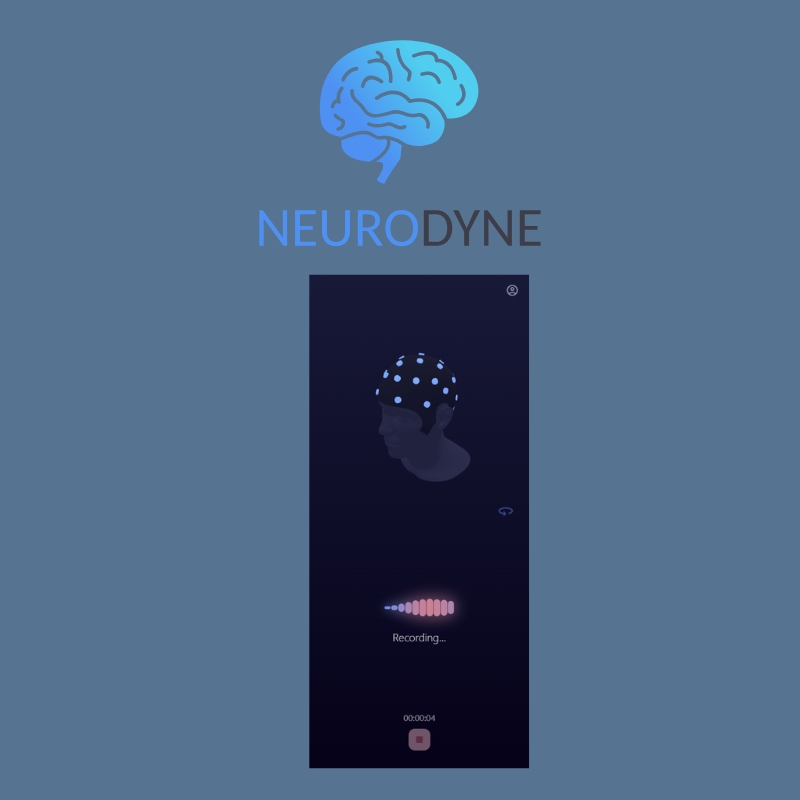
Discover the NeuroDyne Neuro Platform, an advanced mobile EEG solution that transforms how neurological assessments are conducted. Featuring innovative dry electrodes and a portable design, it eliminates cumbersome cables and messy setups, allowing for real-time monitoring in any environment. With cloud-based storage and proprietary algorithms, healthcare professionals can easily access and analyze data, enhancing patient triage and care. Tailored for urgent care facilities and hospitals, this cost-effective solution addresses critical needs in concussion and seizure management. Choose NeuroDyne to streamline assessments, improve patient outcomes, and elevate your practice’s capabilities in neurological care.
Description
Neurological disorders represent one of the most complex and costly challenges in modern healthcare. From traumatic brain injuries (TBI) and concussions to epilepsy and seizure disorders, clinicians face a difficult balance: the need for fast, accurate neurological assessment versus the limitations of traditional diagnostic tools. Conventional electroencephalography (EEG) systems are effective but often bulky, time-intensive, and confined to hospital or specialized lab environments. Advanced imaging such as CT or MRI scans, while valuable, can be expensive, resource-intensive, and unnecessary for a significant percentage of patients.
NeuroDyne, Inc. enters this landscape with a clear mission: to modernize neurological assessment by making EEG monitoring more portable, accessible, and scalable—without sacrificing signal quality or clinical relevance. Through its AI-driven Neuro Platform, NeuroDyne aims to support clinicians with real-time neurological data at the point of care, whether in hospitals, urgent care centers, research settings, or remote environments.
This article provides an in-depth look at NeuroDyne, its technology, its clinical positioning, and the broader implications of portable EEG systems in modern healthcare.
The Growing Need for Better Neurological Assessment Tools
The Burden of Neurological Conditions
Neurological disorders affect hundreds of millions of people worldwide. In the United States alone:
-
Millions of individuals experience traumatic brain injuries each year, including concussions from sports, falls, vehicle accidents, and military service.
-
Epilepsy impacts millions of patients, many of whom face long diagnostic delays due to limited access to specialized monitoring.
-
Hospitals and emergency departments remain under pressure to triage neurological symptoms quickly while controlling costs and minimizing unnecessary imaging.
Traditional workflows often rely on a combination of clinical observation, patient-reported symptoms, imaging, and inpatient EEG monitoring. While effective in many cases, these approaches present limitations:
-
Delayed diagnosis: Inpatient EEG monitoring may require hospital admission and extended stays.
-
Limited accessibility: Specialized EEG systems are not always available outside major hospitals.
-
High costs: Advanced imaging and prolonged hospital monitoring can place financial strain on patients and healthcare systems.
-
Patient discomfort: Conventional EEG setups often involve gels, adhesives, and restrictive cabling.
These challenges have fueled demand for next-generation neurological tools that are portable, efficient, and compatible with modern digital healthcare infrastructure.
Introducing NeuroDyne, Inc.
Company Overview
NeuroDyne, Inc. is a neuroscience technology company founded in 2005 with a focus on brain-computer interface research and neurological innovation. The company’s early research centered on understanding the causes of epileptic seizures, leading to multiple technological advancements in EEG acquisition and neuromodulation.
Over time, NeuroDyne has evolved from a research-driven organization into a developer of practical, deployable neurological assessment tools. Its flagship offering, the Neuro Platform, reflects this evolution by combining advanced EEG hardware, cloud-based analytics, and AI-supported data processing into a single, portable ecosystem.
Headquartered in Germantown, Tennessee, NeuroDyne brings together engineers, neuroscientists, and healthcare professionals with decades of combined experience in neurology and medical technology.
What Is the NeuroDyne Neuro Platform?
A Modern Approach to EEG Monitoring
At its core, the Neuro Platform is a portable EEG system designed to capture, transmit, analyze, and present brain activity data in near real time. Unlike traditional EEG systems that rely on wired connections and conductive gels, NeuroDyne’s platform utilizes active dry electrodes integrated into an EEG cap.
This design choice addresses several long-standing challenges in EEG deployment:
-
Faster setup: No gel application or extensive skin preparation.
-
Improved portability: Reduced cabling and lightweight components.
-
Enhanced patient comfort: Greater freedom of movement compared to traditional setups.
The platform is supported by mobile, desktop, and web-based applications, enabling clinicians and researchers to access EEG data across multiple environments.
Key Components of the Neuro Platform
1. Active Dry Electrode EEG Cap
The EEG cap is designed for ease of use and patient self-application in certain settings. Active dry electrodes amplify signals at the point of contact, helping to reduce noise and preserve signal quality without the need for conductive gels.
This approach can be particularly valuable in:
-
Urgent care or emergency settings
-
Remote or field-based assessments
-
Long-term or ambulatory monitoring scenarios
2. High-Quality Signal Acquisition Hardware
NeuroDyne’s system incorporates low-noise amplifiers engineered to capture EEG signals accurately, even in less-controlled environments. This is essential for ensuring that portable EEG data remains clinically and scientifically meaningful.
3. Mobile EEG Data Collection
EEG data is captured via a mobile system that allows patients or clinicians to conduct assessments outside of traditional EEG labs. This mobility opens the door to:
-
Ambulatory EEG monitoring
-
At-home or community-based data collection
-
On-site assessments in sports, military, or rural healthcare contexts
4. Cloud-Based Data Transfer and Storage
Captured EEG data is transmitted securely to NeuroDyne’s cloud infrastructure, typically via cellular connectivity. Cloud hosting enables:
-
Secure storage of large EEG datasets
-
Remote access for clinicians and authorized healthcare professionals
-
Collaboration and data sharing within care teams
5. AI-Supported Analysis and Alerts
Once uploaded, EEG data is processed using proprietary algorithms designed to assist with patient analysis. The system can generate real-time notifications and alerts, helping clinicians identify patterns or events that may warrant further evaluation.
Importantly, these analytical tools are positioned as clinical decision support, not replacements for professional medical judgment.
How the Neuro Platform Works: Step by Step
-
EEG Signal Capture
Brain activity is recorded using the active dry electrode EEG cap. -
Automatic Data Transmission
Data is sent from the mobile system to the cloud using secure cellular connectivity. -
Data Processing and Analysis
Proprietary algorithms process EEG signals to support patient assessment. -
Clinician Access and Alerts
Authorized healthcare providers can view EEG data, receive alerts, and integrate findings into broader clinical workflows.
This streamlined process is designed to reduce friction between data acquisition and clinical insight.
NeuroDyne’s Focus on Traumatic Brain Injury (TBI)
The Challenge of Concussion and TBI Assessment
Traumatic brain injuries, including concussions, are among the most common neurological injuries worldwide. Yet diagnosing and managing TBIs remains complex due to:
-
Variability in symptoms
-
Limitations of subjective assessments
-
Over-reliance on imaging that may not be necessary for all patients
Many head trauma cases do not require advanced imaging such as CT scans, but clinicians often err on the side of caution due to the lack of accessible neurological assessment tools.
NeuroDyne’s Positioning in TBI Care
NeuroDyne positions its Neuro Platform as a point-of-care neurological assessment tool that can support concussion evaluation and triage. By providing objective EEG data early in the care process, the platform may help clinicians determine next steps more efficiently.
Potential applications include:
-
Initial neurological screening in urgent care
-
Follow-up monitoring after head injury
-
Supporting decisions about imaging or specialist referral
It is important to note that EEG-based assessments are not positioned as replacements for imaging or comprehensive neurological evaluation, but rather as complementary tools.
Addressing Seizures and Epilepsy Monitoring
Limitations of Traditional Epilepsy Diagnosis
Epilepsy diagnosis often requires capturing seizure activity during EEG monitoring, which traditionally involves:
-
Hospital admission
-
Multi-day inpatient stays
-
Limited patient mobility
-
High financial costs
Due to these constraints, many patients experience long delays before receiving a definitive diagnosis.
Remote EEG and the Neuro Platform
NeuroDyne’s Neuro Platform aims to expand access to EEG monitoring by enabling remote and ambulatory seizure data collection. By allowing patients to go about daily activities while being monitored, the platform may increase the likelihood of capturing relevant EEG events.
Benefits of this approach can include:
-
Reduced need for prolonged hospital stays
-
Improved patient comfort and mobility
-
Greater scalability for healthcare systems facing specialist shortages
Again, these tools are designed to support clinicians, not replace comprehensive epilepsy care or specialist interpretation.
Cloud Infrastructure, Security, and Collaboration
Secure Data Handling
NeuroDyne emphasizes secure cloud hosting to protect sensitive neurological data. While specific security certifications are not publicly detailed, cloud-based EEG platforms typically align with healthcare data protection standards such as HIPAA when deployed in clinical settings.
Collaboration Across Care Teams
Cloud access allows EEG data to be reviewed by neurologists, researchers, and care teams regardless of physical location. This supports:
-
Telemedicine workflows
-
Multidisciplinary collaboration
-
Longitudinal patient monitoring
The Role of AI in Modern EEG Systems
Artificial intelligence is increasingly used in neurological research and clinical decision support. In the Neuro Platform, AI-driven algorithms assist with:
-
Signal processing
-
Pattern recognition
-
Event detection
Crucially, AI outputs are intended to augment clinical expertise rather than replace it. Human interpretation remains central to diagnosis and treatment decisions.
Research and Clinical Applications
Clinical Use Cases
-
Point-of-care neurological screening
-
Ambulatory EEG monitoring
-
Remote patient follow-up
-
Support for urgent care and emergency settings
Research Use Cases
-
Neuroscience studies
-
Longitudinal brain activity research
-
Clinical trials requiring portable EEG
-
Military or sports-related brain health research
Leadership and Expertise Behind NeuroDyne
NeuroDyne is led by professionals with deep experience in neuroscience and technology:
-
Dr. Mark H. Myers – Founder & CEO/CTO
-
Cedric Johnson – Co-Founder & COO
Supported by hardware, software, and advisory experts, the team brings decades of combined experience in neuromodulation, engineering, and healthcare innovation.
Regulatory Considerations and Responsible Positioning
Neurological assessment devices often fall under medical device regulations depending on intended use. While NeuroDyne highlights advanced technology and AI-supported analysis, responsible deployment requires:
-
Appropriate regulatory clearance for clinical indications
-
Clear distinction between decision support and diagnostic claims
-
Integration within licensed healthcare workflows
Any clinical use of EEG data should always involve qualified healthcare professionals.
The Future of Portable Neurological Monitoring
The shift toward portable, connected medical technologies reflects broader trends in healthcare:
-
Decentralized care
-
Remote monitoring
-
Data-driven clinical decision support
EEG systems like NeuroDyne’s Neuro Platform illustrate how neurological assessment may become more accessible without sacrificing rigor. As healthcare systems continue to evolve, portable neurotechnology has the potential to improve efficiency, patient experience, and clinical insight.
Final Thoughts
NeuroDyne represents a forward-looking approach to neurological assessment—one that blends established EEG science with modern portability, cloud infrastructure, and AI-assisted analysis. By addressing long-standing challenges in EEG deployment, the Neuro Platform aims to support clinicians in managing complex neurological conditions more efficiently.
While no single technology can solve all challenges in neurology, platforms like NeuroDyne’s signal an important step toward more flexible, scalable, and patient-centered brain monitoring solutions.
As research advances and regulatory pathways mature, portable EEG systems are likely to play an increasingly important role in both clinical care and neuroscience research.
Related products
-
Sale!
Pineal XT
Original price was: $59.00.$29.00Current price is: $29.00. Buy From This Official Website -
Sale!

Advanced Memory Formula
Original price was: $49.95.$41.50Current price is: $41.50. Buy from the Official Website -
Sale!

Noocube
Original price was: $79.99.$64.99Current price is: $64.99. Buy from the Official Website -
Sale!

NeuroZoom
Original price was: $79.00.$49.00Current price is: $49.00. Buy from the Official Website