If MagneSleep has you wondering whether something simpler will do, you’re asking the right question. For memory, focus and sleep, the usual options are everyday habits such as regular movement, a steady sleep routine and simple memory techniques, along with food choices, other supplements, or a visit to a provider when memory problems start to get in the way.
Disclosure: Before you read on, the seller link on this page is an affiliate link. This site may earn a commission if you buy through it. It does not add to the price you pay.
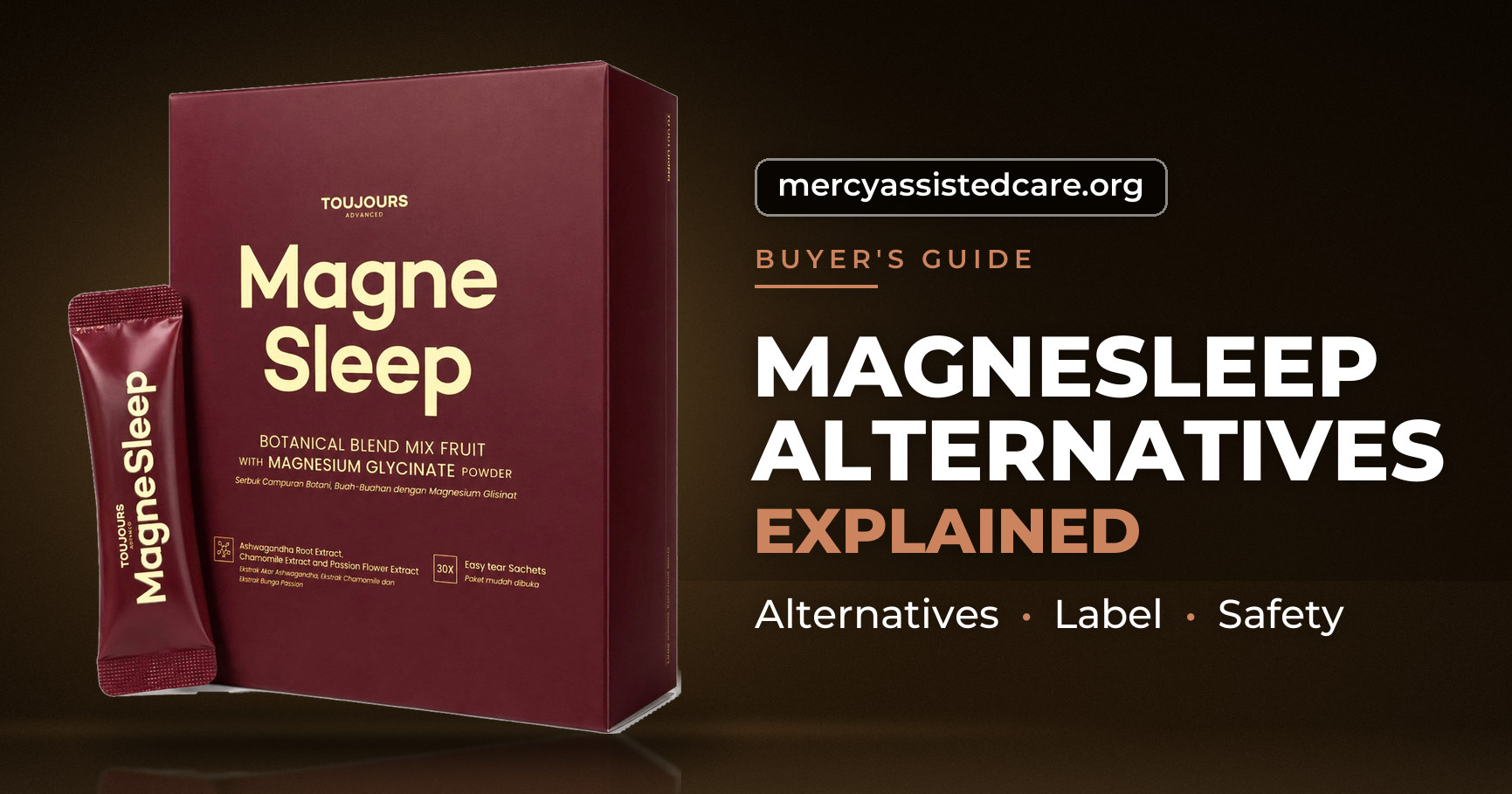
What are the alternatives to MagneSleep?
The seller says MagneSleep was designed to “improve sleep & improve brain health.” It’s sold for anyone over 18 who wants to sleep better or improve brain function. Before you spend money, it helps to see what the research says about the simpler options.
| Option | What the source says |
|---|---|
| Regular physical activity | Harvard Health’s memory guide, Harvard Health’s memory guide, says that in study after study, physical activity has been associated with a decreased risk of memory loss over time. The brains of people who exercise regularly shrink less with age, especially the hippocampus, a brain structure key to memory. |
| Memory techniques | Harvard describes chunking, which groups a list into categories, and loci, which places items along a familiar route in your mind. Stanford’s working memory guide covers mnemonics, storytelling, and rhymes and songs. |
| Daily memory habits | Harvard suggests staying organized. Write down every appointment, keep to-do lists, and keep an up-to-date list of passwords so you aren’t trying to recall them when it’s urgent. |
| Less added sugar and refined carbs | Healthline’s memory guide cites a 2021 review that found a diet high in saturated fat and added sugar may impair hippocampal function. It also cites a 2025 study of adults aged 50 to 64, where just 10 days on a diet high in added sugars negatively affected memory recall. |
| Omega-3 from fatty fish | Healthline says omega-3 fatty acids are thought to play an important role in brain health, and suggests fatty fish or a Mediterranean diet. If you don’t enjoy fish, it says a supplement can help you reach your daily intake. |
| Managing other health conditions | Cleveland Clinic’s memory guide lists depression, diabetes, head trauma, high blood pressure, high cholesterol, obesity and sleep disorders as conditions that can increase the risk for cognitive decline. It says that when you manage them with a provider, you help your brain too. |
Cleveland Clinic’s guide sums up the core habits in one line: sleep well, eat well, exercise and manage stress. None of those needs a purchase.
If sleep is your main worry, our Sleep, Mind and Mood page is a good next read.
What are the signs of memory loss?
Some memory changes are normal as you get older, Cleveland Clinic’s guide says. The clearest line it draws is this: when memory problems start to interfere with daily life, such as forgetting to pay bills or getting lost in familiar places, it’s time to talk with a healthcare provider. Please do that soon, rather than waiting to see whether a supplement helps.
How do I tackle brain fog and poor focus?
Start with sleep. Cleveland Clinic’s guide lists sleep first among its healthy habits. For focus, Stanford’s guide explains that working memory is “the conscious part of our memory where we temporarily store information, keep track of what we are doing, and make connections between new and old material.” Stanford says working memory is limited, so its strategies aim to lighten the load: link new facts to what you already know, turn information into a story or rhyme, and stay organized. Stanford wrote the guide for college students, but the tools are simple enough to use at home. Harvard also has a guide titled Harvard Health’s focus and memory guide, which covers four ways to improve focus and memory.
Which vitamin or brain supplement is best?
The memory guides here don’t crown a single vitamin. Healthline’s guide comes closest to a supplement suggestion. It says omega-3 fats are thought to play an important role in brain health, and that a supplement can help if you don’t eat fatty fish.
You’ll also see pages naming a “#1 brain supplement.” Treat that as one opinion, not a research result. The memory guides point first to sleep, food, movement and stress.
MagneSleep includes vitamin D3, which the seller says aids magnesium absorption. You can see the amount in the table below.
What’s in MagneSleep, and how do you take it?
The label’s Supplement Facts list the following for each serving of two capsules. The label says adults take two capsules daily, with 6–8 oz of water.
| Ingredient (per 2 capsules) | Amount | % Daily Value |
|---|---|---|
| Vitamin D3 (as cholecalciferol) | 20 mcg (800 IU) | 100% |
| Magnesium (as magnesium glycinate) | 367 mg | 87% |
| Magnesium (as magnesium threonate) | 18 mg | 4% |
| Magnesium (as magnesium taurate) | 10 mg | 2% |
| Magnesium (as magnesium malate) | 10 mg | 2% |
| Magnesium (as magnesium orotate) | 2.5 mg | 1% |
| Shilajit extract (std. to 40% fulvic acid) | 50 mg | Not established |
| Boron (as boron glycinate) | 1 mg | Not established |
Glycinate is the largest magnesium source in the blend. The seller says it’s “gentle on the stomach, it’s easily absorbed, and it’s not very expensive. It’s also very easy to find.” Each bottle holds 60 capsules, a 30 day supply. That makes MagneSleep a daily supplement, two capsules every day, so plan for it as a routine rather than a one-off.
The label cautions that pregnant or nursing mothers, children under 18, and anyone with a known medical condition should consult a physician before using it. It also says not to exceed the recommended dose.
What does MagneSleep cost?
Prices as of October 19, 2026: the seller lists two offers on its Product Page, Buy 1, Get 3 Free for $39.95 and Buy 2, Get 6 Free with free shipping for $79.90. Because each bottle is a 30 day supply, the Buy 1, Get 3 Free offer covers four bottles. Both offers work out to about $9.99 per bottle. Prices and bundles change over time.
Compared with the habits above, which need no purchase, MagneSleep is a recurring cost. Compared with plain magnesium glycinate, it’s a blend, so you pay for the other ingredients too.
What is the MagneSleep refund policy?
The seller says you can request a refund “within 180 days of delivery of your first order,” and that it will refund “the full investment of the product. No questions asked.” A separate line on the seller’s page counts 180 days from your order instead. The two windows differ, so plan around the earlier one, which counts from your order date.
What are the side effects, and who should skip it?
The seller says the side effects are “minimal to none.” It contrasts MagneSleep with other forms of magnesium that it says can cause stomach upset. The label asks pregnant or nursing mothers, children under 18, and people with a known medical condition to consult a physician first. If one of those describes you, talk with your provider before you start.
Does FDA registration mean MagneSleep is approved?
The label says MagneSleep is made in an FDA registered facility, but the FDA does not approve manufacturing facilities; it registers them and inspects them for good manufacturing practice.
The FDA doesn’t approve dietary supplements either. Its dietary supplements page explains how the agency oversees them.
For context, a 1994 GAO report to Congress found that FDA regulates dietary supplements case by case, and that manufacturers do not submit data to FDA on safety before marketing. That applies to every supplement on this list, not only MagneSleep.
Which two supplements should never be taken together?
The pair that matters depends on what you take. A pharmacist can check your full list, including MagneSleep, and tell you which combinations to avoid.
How do I start this week?
We suggest keeping one simple log for seven days. Each morning, write down when you went to bed, how many times you woke up, whether you walked, and one thing you forgot the day before. Add any supplement or medicine you take. Bring that page to your pharmacist or provider, and you’ll get much clearer answers than from memory alone.
If you’re comparing MagneSleep with other sleep products, our best sleep supplements guide compares ingredients and price per serving.
Before you order
- Bring the label and your full list of medicines to a pharmacist.
- Start your seven-day log before you decide, so you can compare how you feel with and without a supplement.
By the Senior Safety Desk Editorial Team
This article is for general information purposes only and does not constitute medical advice. Consult your doctor or qualified healthcare provider before making changes to your health routine.